

Concrete Footpaths in South East Melbourne
Front entry paths, garden paths and paths to the gate, set straight and level with your doors and steps.
Get a free written quote

Tell us your suburb and where the path needs to go, and Kobir will come out to measure.
We pour concrete footpaths and garden paths for homes across Casey, Cardinia and Greater Dandenong: front entry paths, paths through the garden, and the run to the gate, letterbox or shed. Every path is set straight and level to meet your doors, gates and steps, in plain, coloured or exposed aggregate. Kobir measures on site and sends a written quote before anything is booked.
Paths We Pour
-
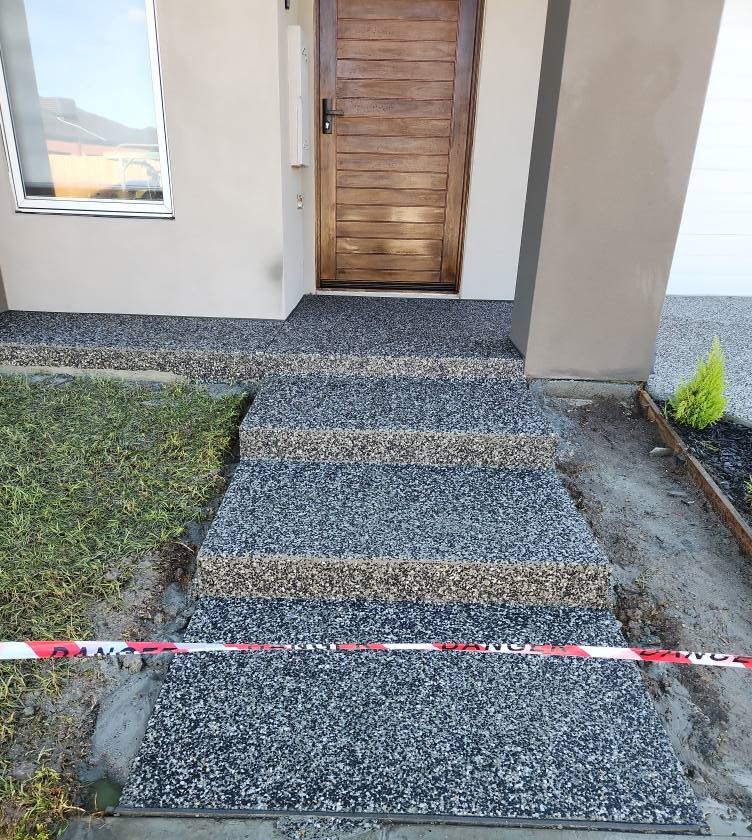
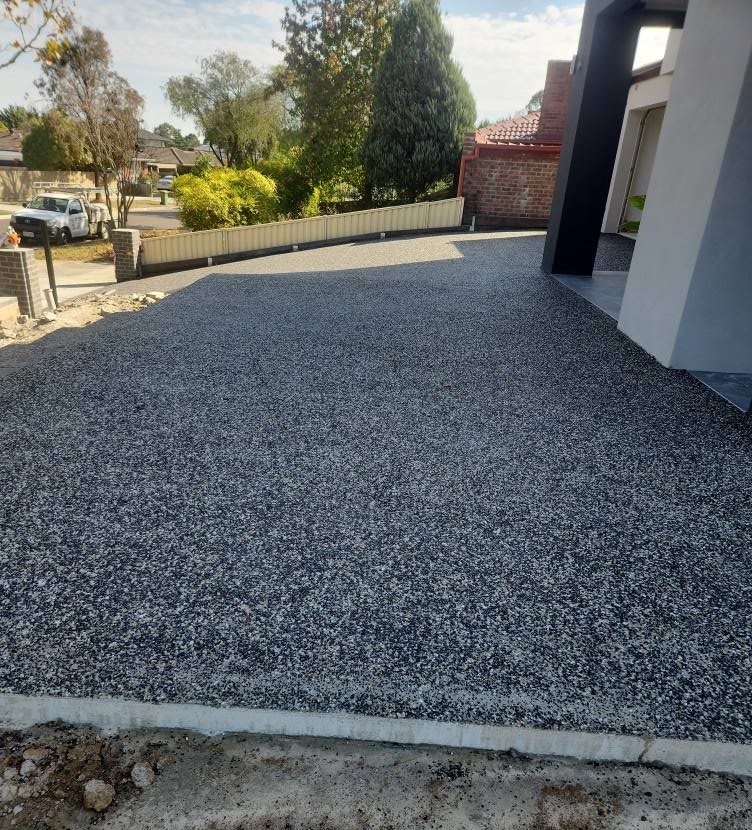
The path from the driveway or the street to your front door is the one every visitor walks. We set it level with the porch and the driveway edge, and finish it to match. That's often exposed aggregate to suit an exposed aggregate driveway.
-
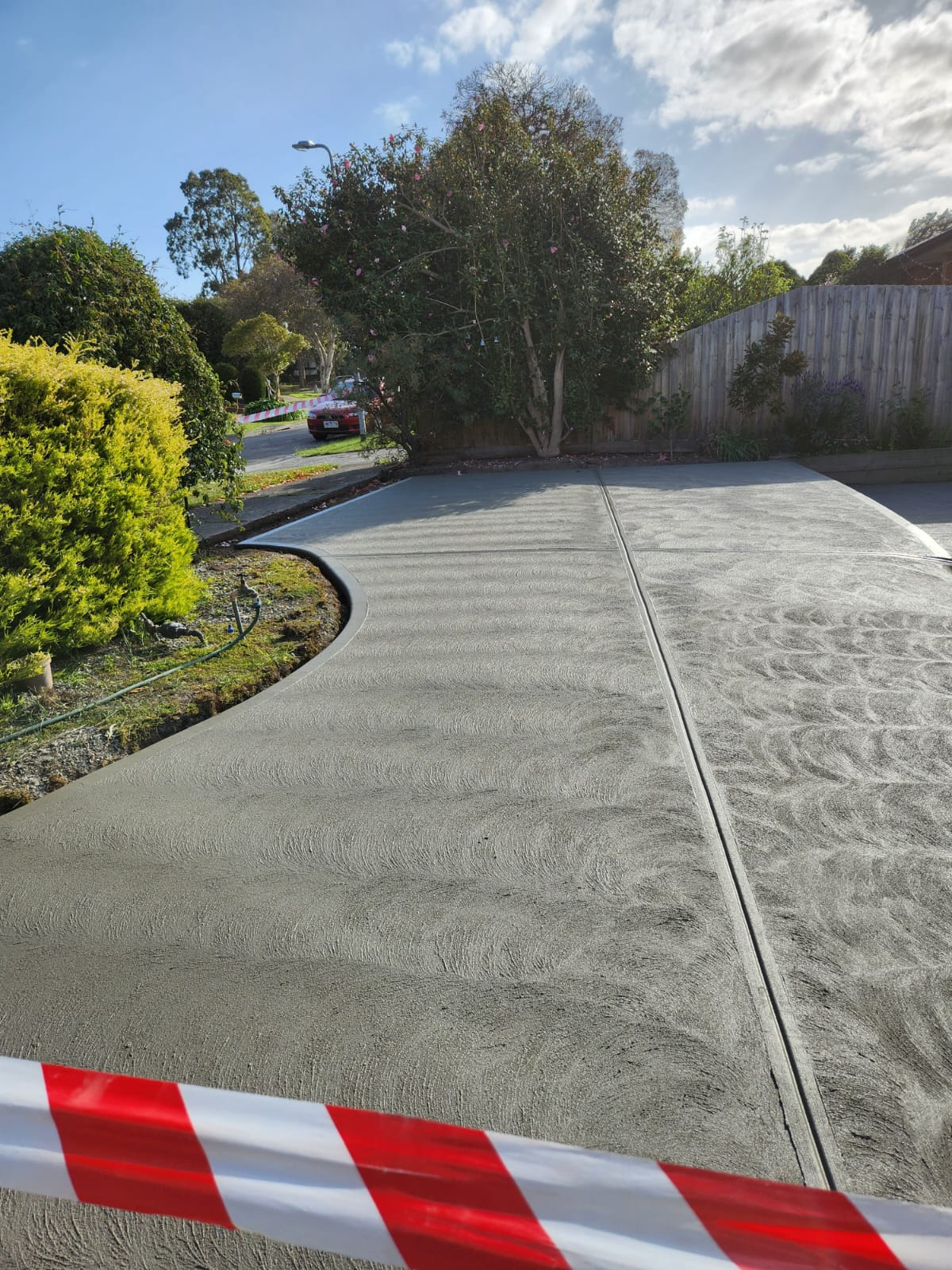
Paths through the garden, out to the clothesline, the shed or the back gate. They can run straight or curve around garden beds, with edges set so lawn and mulch sit neatly against them.
-
Lifted pavers and cracked paths are trip hazards. We break out and remove the old path, fix the base underneath, and pour a new one that stays flat.
Planning Your Path
Width
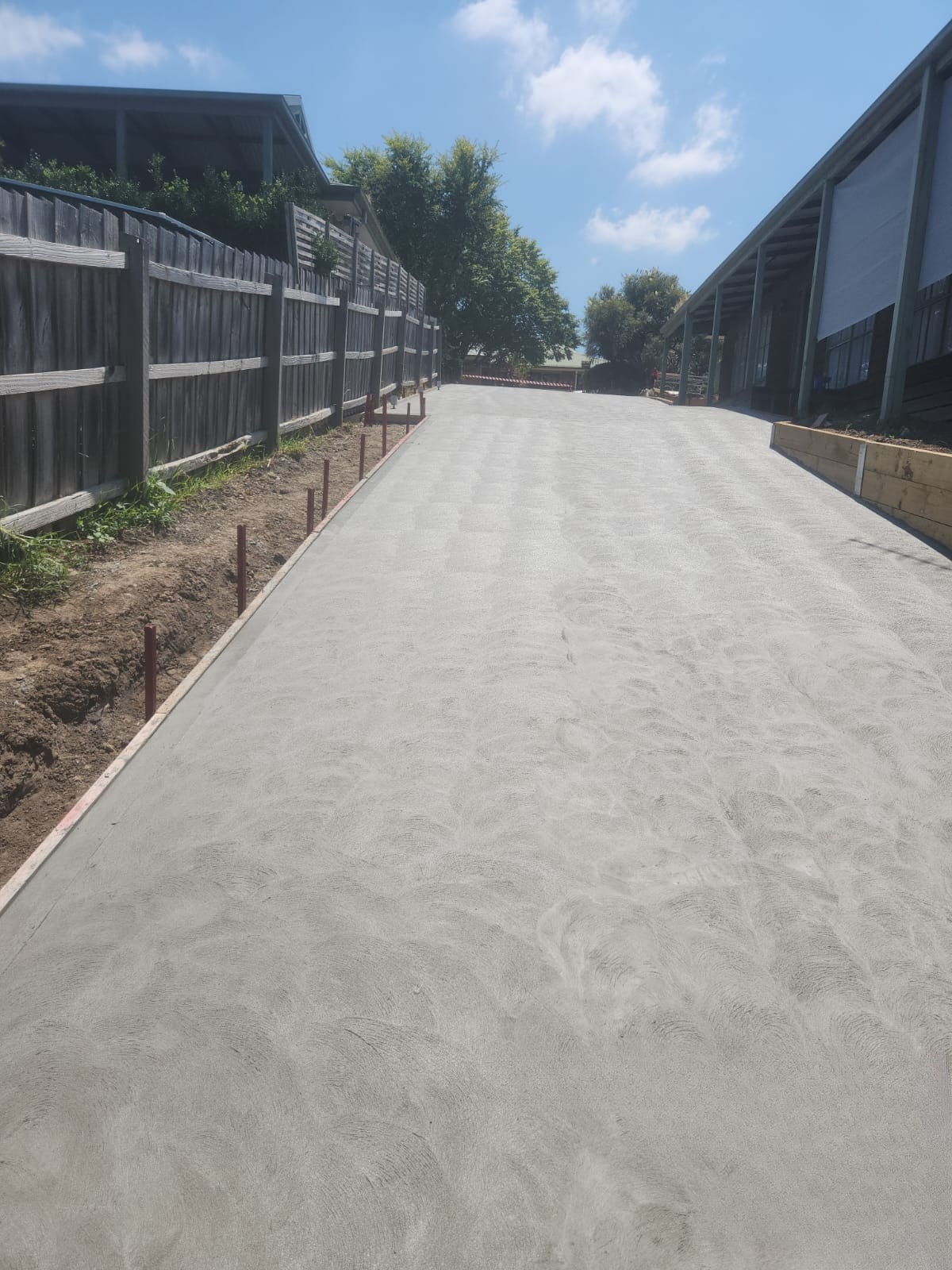
About 1 m suits one person. Around 1.2–1.5 m lets two people walk side by side or roll a wheelie bin past someone.
Straight or curved
Straight paths are the most practical. Curved paths suit gardens, and we set the formwork to a smooth line rather than a series of kinks.
Steps
Where the ground drops, we form concrete steps into the path, with even step heights so nobody misjudges one.
Where the water goes
Every path has a slight fall to one side so it doesn't hold puddles.
Grip and Finish
A path is walked on wet, so grip matters as much as looks.
Smooth steel trowel
It looks clean but is slippery when wet, so we don't recommend it for outdoor paths.
Coloured concrete
It matches a coloured driveway. Ask for a textured finish or a non-slip sealer outdoors.
Broom finish
Fine ridges brushed across the path give good grip. It's the practical choice in plain concrete.
Exposed aggregate
The stones on the surface give the most grip and hide dirt. It's popular for front paths.
How We Build a Path That Stays Flat
Five steps, each one set on the last.
Base
We dig out soft soil and compact a crushed rock base, so the path doesn't sink or tilt.
Thickness
Paths for foot traffic are usually 75–100 mm thick. Anywhere a car or trailer might cross is built to driveway thickness.
Edges and falls
Formwork sets straight or curved edges and a slight fall so water runs off.
Joints
Narrow paths need joints at close spacing. We saw-cut them after 48 hours, or about a week in winter, so any cracking follows the cuts.
Curing
You can walk on it after a day or two.
Side Paths and the Council Footpath
Concrete Footpaths Across South East Melbourne
We pour paths in three council areas, all within an hour of our Pakenham base. For everything else we pour, see concreting in South East Melbourne.
City of Casey
Berwick / Clyde North / Clyde / Cranbourne / Narre Warren / Hampton Park / Lynbrook / Endeavour Hills
Cardinia Shire
Pakenham / Officer / Beaconsfield / Nar Nar Goon / Koo Wee Rup
Concrete Footpath FAQs
How wide should a concrete path be?
About 1 m suits one person. Around 1.2–1.5 m lets two people walk side by side or get a wheelie bin past.
Can a concrete path curve?
Yes. We set the formwork to a smooth curve, which suits garden paths around beds and trees.
Which finish is least slippery?
Exposed aggregate has the most grip, then a broom finish. Smooth steel-trowel finishes are slippery when wet, so we don't use them on outdoor paths.
How thick is a concrete path?
Usually 75–100 mm for foot traffic. Anywhere a car or trailer might cross is built to driveway thickness.
Can you add steps to a path?
Yes. Where the ground drops, we form concrete steps into the path, with even step heights.
Can you replace my old pavers with concrete?
Yes. We remove the pavers, fix the base and pour a new concrete path.
Can you build the public footpath outside my house?
The public footpath is council land. We rebuild the section that runs through a new or replaced crossover, under the council's permit.
When can I walk on a new path?
After a day or two. The concrete keeps gaining strength for weeks after that.
Book a Free Path Measure and Quote
Tell us your suburb and where the path needs to go. Kobir will come out to measure and send a written quote.