

Concrete Around the House in South East Melbourne
Side paths, bin pads and the strip along the back, falling away from your walls and clear of weep holes.
Get a free written quote

Tell us your suburb and how far the concrete needs to go around the house, and Kobir will come out to measure.
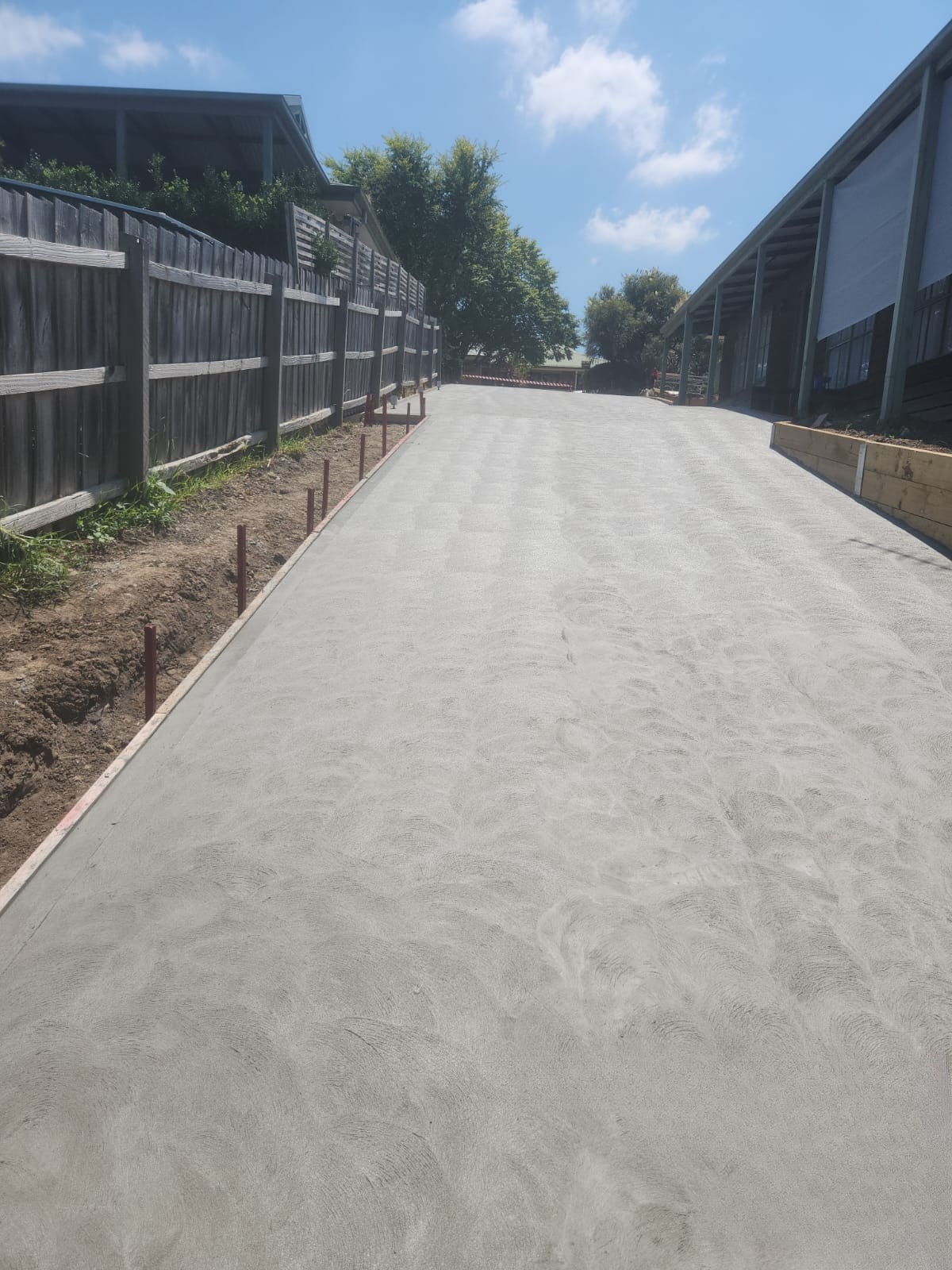
We pour concrete around the house for homes across Casey, Cardinia and Greater Dandenong: the side paths, the strip along the back, bin pads and the path to the clothesline. Every path falls away from your walls, sits below your weep holes and vents, and leaves the slab edge clear.
Concrete around the house keeps water away from your slab, stops weeds and mud along the walls, and gives you a clean walkway round the whole house. Kobir comes out to measure, checks the levels against the house, and sends a written quote before anything is booked.
What Concrete Around the House Covers
Side paths from the front to the back gate, usually the full length of the house on both sides.
The strip along the back of the house, often joined to the backyard slab or path.
Bin pads beside the side gate, so the bins sit level and out of the mud.
The clothesline path and the run out to the shed or water tank.
Done Right Against Your House
The edge against your house is where concrete around the house goes right or wrong. We get these right on every job.
Fall away from the house
The concrete slopes away from your walls. The National Construction Code asks for at least 50 mm over the first metre in most cases, so water runs off rather than soaking towards the slab.
Below the house slab
The house slab has to sit at least 50 mm above concrete that slopes away from it. We set our levels from the house, not the fence.
Weep holes and vents stay clear
We keep the concrete below your weep holes, damp-proof course and any sub-floor vents. Industry guidance asks for the damp-proof course to sit at least 75 mm above the paving.
The slab edge stays visible
Paving is kept below the termite inspection zone, so the edge of the house slab can still be checked.
An isolation joint against the house
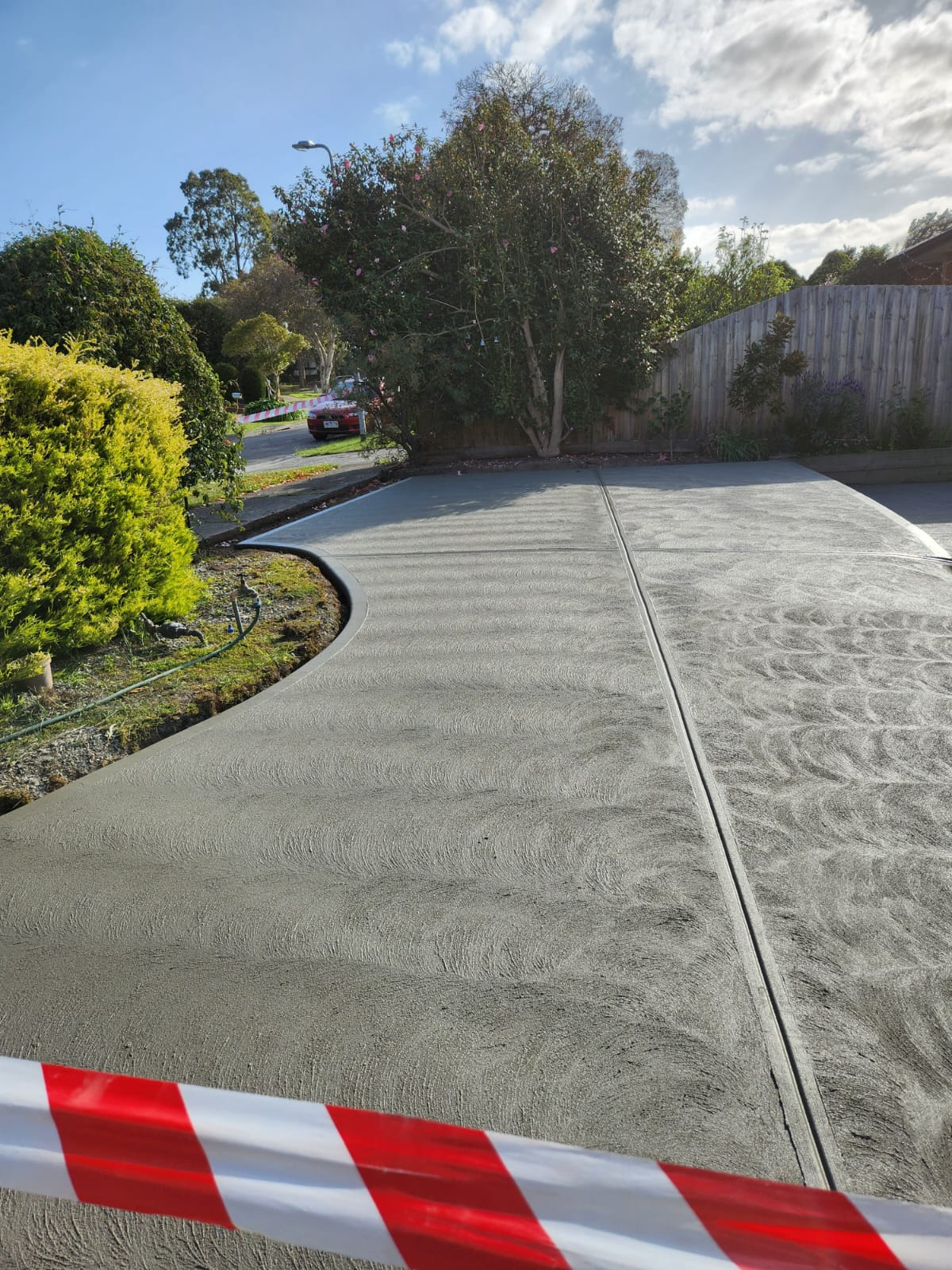
A flexible joint separates the path from the house, so they can move independently and the path doesn't crack along the wall.
Where the Water Goes
Falling the concrete away from the house only helps if the water has somewhere to go.
We set the falls towards your existing stormwater pits and downpipe outlets. Where a narrow side path can't fall away far enough, a drain beside the house carries the water off instead. Kobir will tell you at the quote if your site needs one.

How We Pour Concrete Around the House
Paths around the house are usually 75–100 mm thick, because they only carry foot traffic.
Measure and quote
Kobir checks the levels against the house, the pits and downpipes, and the access down each side.
Dig out and base
We remove soil and builder's rubble, then compact a crushed rock base.
Forms and falls
Formwork sets the height and the fall away from the house, with the isolation joint against the wall.
Pour and finish
We place, screed and finish the concrete, usually with a broom finish for grip.
Saw-cut joints
Narrow paths need joints at close spacing. We cut them after 48 hours, or about a week in winter.
Cure
You can walk on it after a day or two.
Poured With Your Driveway
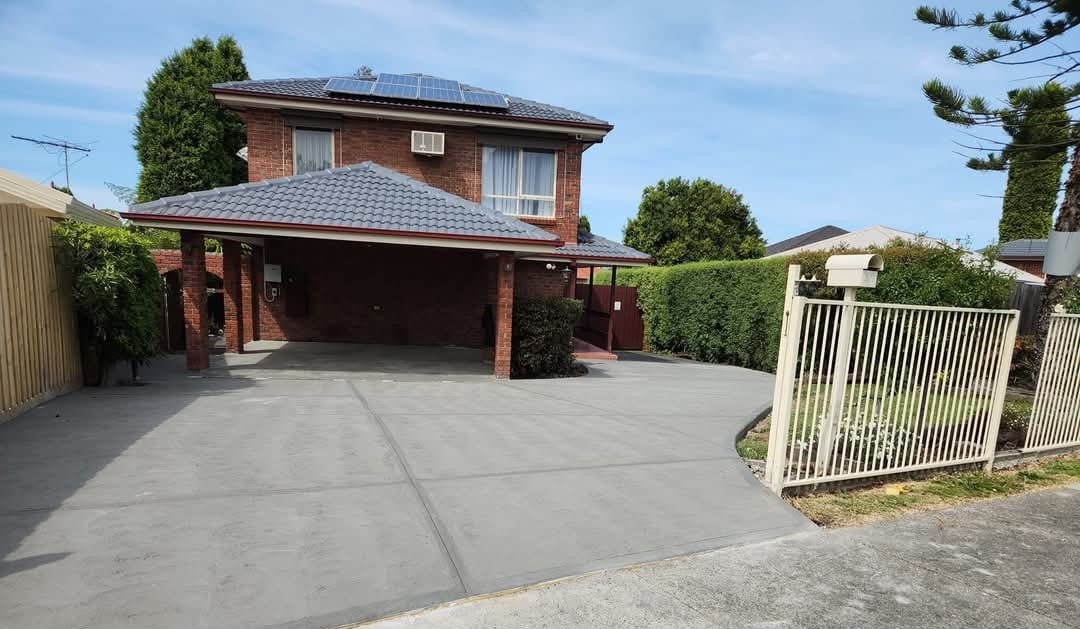
On new estates in Clyde North, Officer, Cranbourne and Pakenham, the driveway, the crossover and the concrete around the house are usually poured on the same visit. Your levels line up from the street to the back fence, and you deal with one crew.
Plain, Coloured or Exposed Aggregate?
Concrete Around the House Across South East Melbourne
We pour concrete around the house in three council areas, all within an hour of our Pakenham base. For everything else we pour, see concreting in South East Melbourne.
City of Casey
Berwick, Clyde North, Clyde, Cranbourne, Narre Warren, Hampton Park, Lynbrook, Endeavour Hills
Cardinia Shire
Pakenham, Officer, Beaconsfield, Nar Nar Goon, Koo Wee Rup
Concrete Around the House FAQs
The questions people ask most about concrete against their house.
How far should concrete fall away from the house?
The National Construction Code asks for at least 50 mm over the first metre in most cases. We set the fall from the house outwards, so water runs away from your walls.
Can concrete go right up against the brickwork?
It can meet the wall, with a flexible isolation joint between them, as long as it stays below the weep holes and damp-proof course and leaves the slab edge visible.
Will concrete around the house cover my weep holes or vents?
No. We set the level so weep holes, the damp-proof course and any sub-floor vents stay clear.
What about termites?
We keep the concrete below the termite inspection zone, so the edge of your house slab can still be inspected.
Where does the water go?
Towards your stormwater pits and downpipe outlets. Where a narrow path can't fall away far enough, a drain beside the house carries the water off.
Can you do it at the same time as the driveway?
Yes. On new homes we usually pour the driveway, the crossover and the concrete around the house on the same visit.
How thick is concrete around the house?
Usually 75–100 mm, because it only carries foot traffic. Areas where a car or trailer will drive are built to driveway thickness.
Will it crack against the house?
An isolation joint against the house and saw-cut joints along the path control where it moves, so any cracking follows the joints rather than running across the path.
Book a Free Measure and Quote
Tell us your suburb and how far the concrete needs to go around the house. Kobir will come out to measure and send a written quote.